A GUIDE TO LOCAL HEALTHCARE McKinney, Texas

McKinney, Texas · Hip and back symptoms

Hip pain or lower-back pain?7 clues to bring to the conversation.

A pain near the hip can be difficult to name. Is it in the joint, the outer hip, the buttock or the lower back? These areas can overlap, and more than one problem can be present.

This McKinney guide explains seven details that help a clinician evaluate hip and lower-back pain together.


01 OF 07

Separate the groin from the outer hip.

Pain felt deep in the groin can be associated with the hip joint, while pain over the outer side may involve nearby tendons or other soft tissues. These are useful descriptions, not rules that identify a diagnosis.

Point to the main area and describe whether it spreads. Avoid calling every pain around the pelvis “sciatica” before the pattern has been assessed.

An open notebook, pen and clock for recording symptom changes.
Point to the main area.Groin, outer hip and buttock are different descriptions.
02 OF 07

Include the buttock and lower back.

Discomfort in the buttock can overlap with symptoms from the lower back, nearby joints or local tissues. Some people have more than one source of pain.

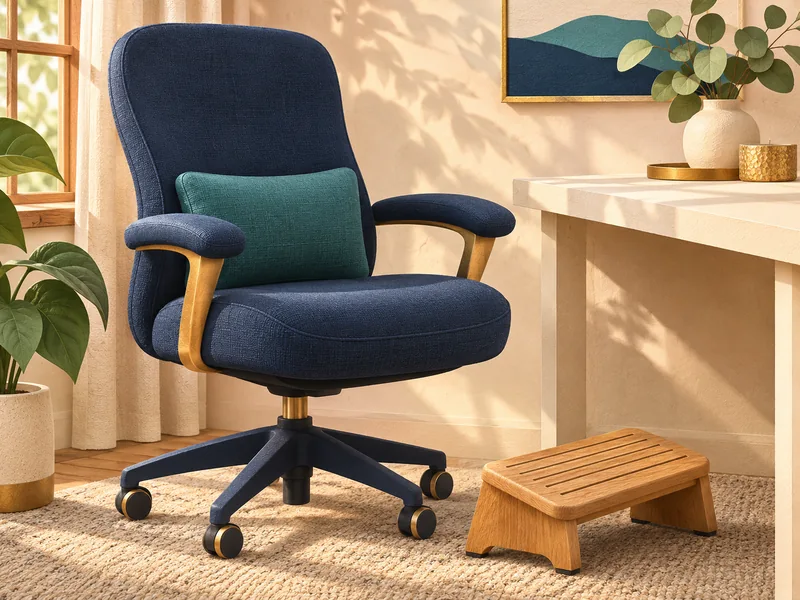
Mention whether the back hurts at the same time and whether either symptom changes with sitting, bending or walking. An examination may need to include both regions even if you booked because of only one.

A supportive chair with a lower-back cushion and a footrest.
Explain what happens together.The hip and back may both need examination.
03 OF 07

Describe walking and weight bearing.

Does pain begin with the first few steps, build with distance or occur when you put weight on the leg? Is getting up from a chair difficult? These details help explain the limitation.

New inability to walk or bear weight, especially after a fall, needs urgent medical assessment. Do not keep testing the leg with longer walks to determine how serious it is.

Navy walking shoes beside a gently curving teal path.
Describe the first difficult step.New inability to bear weight needs urgent care.
04 OF 07

Notice what happens when lying on the side.

Outer-hip pain can be more noticeable when lying on the affected side. Night discomfort can also have other explanations, so it should not be used as a self-test for bursitis or a tendon problem.

Tell the clinician which position is difficult and whether changing position helps. Persistent sleep disruption is a reason to discuss the problem, even if you can manage during the day.

A bed with a teal pillow and a smaller support cushion.
Describe the sleeping position.Night pain deserves context, not a guessed label.
05 OF 07

Mention symptoms below the hip.

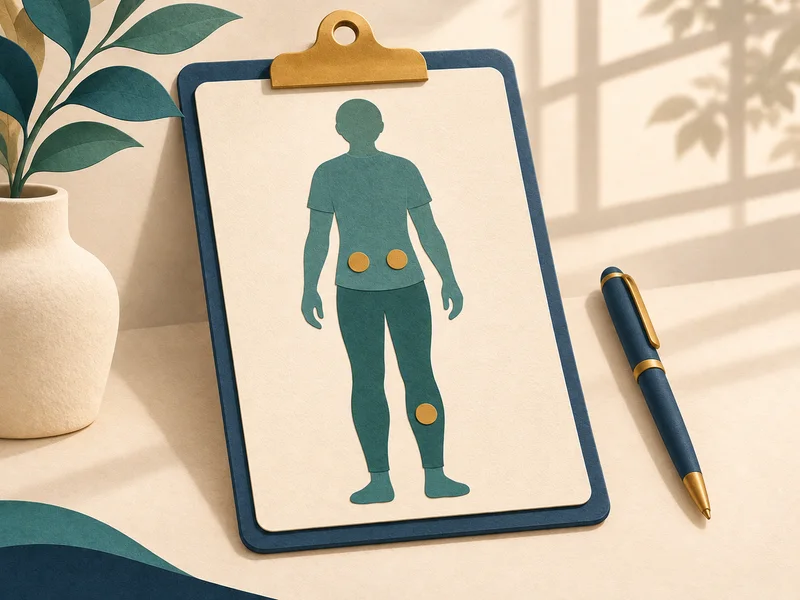
Pain that travels down a leg with tingling, numbness or weakness raises different questions from an isolated ache over the hip. A clinician may check nerve function as well as hip movement.

New or worsening weakness needs prompt care. Back and leg symptoms with bladder or bowel changes, or numbness around the genitals or anus, need emergency assessment.

Illustrated symptom-location worksheet with markers on the lower back and one leg; not an anatomical diagram.
Include leg and foot symptoms.A nerve examination may be part of the visit.
06 OF 07

Report injury, swelling or illness.

A fall, sudden severe pain, a hot or swollen joint, fever or feeling unwell can change the urgency. These are not situations to manage only by choosing a stretch from the internet.

Seek prompt medical care for a hot, swollen hip or fever with joint pain. Severe pain after injury or inability to walk needs emergency assessment.

Illustration of a calendar, clock and notebook representing the duration of symptoms.
Start with safety.An injury or illness changes the next step.
07 OF 07

Ask what the examination is trying to distinguish.

A clinician may assess hip movement, the lower back, walking and nerve function. The purpose is to connect the symptoms with findings before deciding whether imaging or other tests would help.

Ask which area seems to explain the main limitation and what would change the plan. You do not have to decide between a hip problem and a back problem before requesting an evaluation.

You can also read when to get back pain checked for more on that decision.

Illustration of conversation bubbles over a notebook representing questions for a clinician.
Let the examination guide the next step.You do not need a diagnosis before the visit.

YOUR NEXT STEP IN McKINNEY

Learn more about Texas Spine Physicians

Consider the hip and lower back together.

Brite John Chalunkal, DO

YOUR GUIDE’S AUTHOR

Brite John Chalunkal, DO

Pain Medicine
Physical Medicine & Rehabilitation

When the pain sits between the labels “hip” and “back,” an evaluation can look at both. The useful result is a clearer explanation of the limitation and an appropriate next step.

At Texas Spine Physicians in McKinney, I combine Pain Medicine with Physical Medicine and Rehabilitation to evaluate pain and discuss next steps. Bring your symptoms, prior care and the activity you want help with. The office can confirm your provider preference when arranging a visit.

Make your visit more useful

Bring the exact pain location, walking tolerance, sleep position and any symptoms into the leg. Include injury history and relevant records.

01

Two board certificationsPain Medicine and Physical Medicine & Rehabilitation

02

Specialty trainingColumbia residency and University of Michigan pain fellowship

03

A McKinney officeBack, neck, nerve and joint pain care on Eldorado Parkway

WHAT HAPPENS NEXT

A simple start to your first visit.

  1. 1

    Request a visit

    Use the practice website or call the office. Mention your provider preference and ask about insurance or referral requirements.

  2. 2

    Confirm the details

    The office will contact you to arrange the visit. Your appointment is confirmed when the team confirms the provider, date and time.

  3. 3

    Bring your starting point

    Bring your medication list, relevant records or imaging, insurance information and questions. Include one activity you would like to discuss getting back to.

BEFORE YOU MAKE THE CALL

A few common questions.

Can lower-back pain feel like hip pain?

Yes. Symptoms from the lower back can be felt around the buttock or hip region. Hip and local soft-tissue conditions can overlap with that pattern. History and examination help distinguish them.

Should I keep walking with hip pain?

That depends on the cause and severity. Use comfortable activity only when it is appropriate for your situation. New inability to bear weight, severe injury-related pain or a hot swollen joint needs urgent assessment.

What insurance does Texas Spine Physicians accept?

The practice accepts Medicare, Medicaid and most commercial insurance plans, including Blue Cross Blue Shield, Aetna and Cigna. Participation and coverage vary by specific plan. Call (469) 296-9782 so the office can check your plan, explain referral requirements and discuss self-pay options.

PAIN CARE IN McKINNEY

Get help sorting out the hip and back overlap.

Request an evaluation with Texas Spine Physicians in McKinney. The office will follow up to confirm your provider, appointment details and insurance requirements.

Request an appointment Prefer to talk? Call (469) 296-9782

For educational purposes only.

Powered by GrowLocals.ai