A GUIDE TO LOCAL HEALTHCARE McKinney, Texas

McKinney, Texas · Disc and nerve questions

A pinched nerve. A herniated disc.7 things that help tell the terms apart.

Two terms often appear in the same search: pinched nerve and herniated disc. They can be connected, but they do not mean the same thing. A disc is a structure. Nerve irritation describes a different part of the problem.

Here are seven points for McKinney readers making sense of back symptoms, scan reports and possible next steps.


01 OF 07

A disc problem and a nerve problem can overlap.

Discs sit between the bones of the spine. A herniation happens when disc material pushes through a weakened outer area. That may irritate or press on a nearby nerve, but a disc finding does not automatically mean a nerve is being affected.

When discussing a scan, ask which finding matches the symptoms and examination. The most dramatic word in the report may not be the most useful one.

An open notebook, pen and clock for recording symptom changes.
Connect the report with the symptoms.A structure and a symptom describe different things.
02 OF 07

A nerve problem may be felt beyond the back.

Irritation of a lower-back nerve root can produce pain, tingling, numbness or weakness farther along the leg. The painful area may be some distance from the source.

Describe where the symptoms travel, which side they affect and any change in strength. Our sciatica doctor guide explains the evaluation options for that pattern.

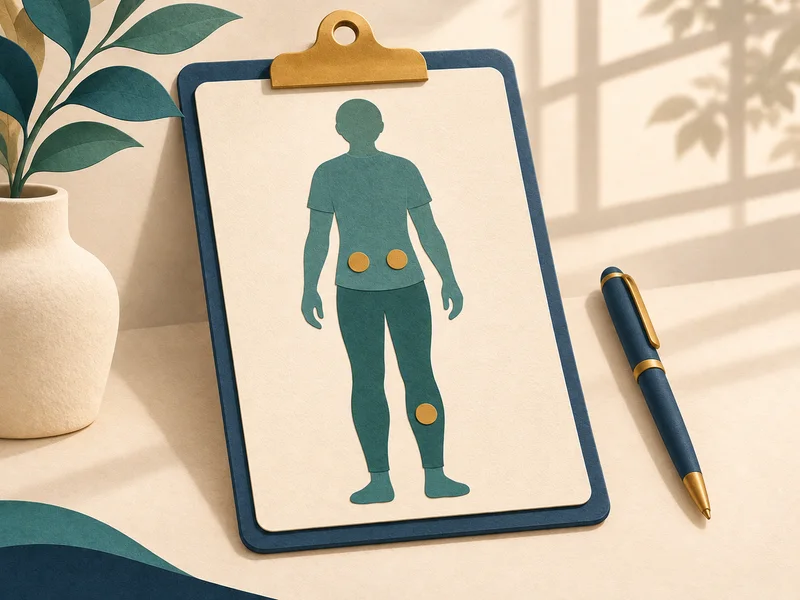
Illustrated symptom-location worksheet with markers on the lower back and one leg; not an anatomical diagram.
Look beyond the sore spot.The route of symptoms helps guide the examination.
03 OF 07

An imaging finding may not cause symptoms.

Some people have disc changes without related pain. A scan is one piece of information, so its findings need to be interpreted alongside your history and examination.

A useful question is: “Does this finding explain the side and pattern of my symptoms?” Another is: “Would the result change what we do next?” Avoid assuming that every finding needs a procedure.

Illustration of conversation bubbles over a notebook representing questions for a clinician.
Ask what the finding explains.The report needs clinical context.
04 OF 07

A disc is not the only possible source of pressure.

Spinal stenosis means narrowing of spaces around nerves or the spinal cord. Bone and other tissue changes can contribute to that narrowing. The symptoms vary with the location and severity.

This is one reason the phrase pinched nerve is not a complete diagnosis. Similar leg complaints may also need assessment for problems outside the spine.

Illustration of an exercise mat, resistance band and notebook representing previous care and follow-up.
Keep the explanation open.More than one condition can affect a nerve.
05 OF 07

An examination helps decide whether imaging is useful.

A clinician may check walking, strength, sensation and reflexes and ask which movements change symptoms. These findings help determine whether further tests would be useful.

Bring old reports and images if you have them. An MRI is not automatically the first step for every episode of back pain, while new weakness or other warning signs may require a faster assessment.

Illustration of walking shoes, a grocery bag and a chair representing everyday activities.
Start with the clinical picture.Testing should answer a useful question.
06 OF 07

Nonsurgical care may be part of the discussion.

Depending on the cause and findings, care may include activity changes, physical therapy or appropriate medicines. Some people may discuss an injection or another intervention when there is a specific reason to consider it.

Ask what each option is meant to improve, what its risks are and how progress will be assessed. No single option fits every disc or nerve complaint.

An exercise mat, resistance band and planning notebook.
Ask about the purpose of each option.Benefits, risks and follow-up belong in the same conversation.
07 OF 07

Surgery is a separate decision.

A herniated-disc diagnosis does not by itself mean surgery is necessary. The decision depends on symptoms, examination, response to other care and any urgent neurological findings.

Some situations require urgent surgical assessment, including bladder or bowel dysfunction with concerning back or leg symptoms. For other cases, ask what would make referral appropriate and which alternatives remain reasonable.

If you’re comparing local options, see our guide to choosing a pain-management practice in McKinney.

Illustration of a calendar, clock and notebook representing the duration of symptoms.
Understand the decision points.The diagnosis alone does not choose the treatment.

YOUR NEXT STEP IN McKINNEY

Learn more about Texas Spine Physicians

Connect the symptoms, examination and imaging.

Brite John Chalunkal, DO

YOUR GUIDE’S AUTHOR

Brite John Chalunkal, DO

Pain Medicine
Physical Medicine & Rehabilitation

You do not need to interpret every phrase in an MRI report before requesting help. An evaluation can connect the report, examination and symptoms so the next discussion is about appropriate care.

At Texas Spine Physicians in McKinney, I combine Pain Medicine with Physical Medicine and Rehabilitation to evaluate pain and discuss next steps. Bring your symptoms, prior care and the activity you want help with. The office can confirm your provider preference when arranging a visit.

Make your visit more useful

Bring the actual imaging report, prior treatment details and a description of any traveling pain, numbness or weakness. Ask which findings matter to your symptoms.

01

Two board certificationsPain Medicine and Physical Medicine & Rehabilitation

02

Specialty trainingColumbia residency and University of Michigan pain fellowship

03

A McKinney officeBack, neck, nerve and joint pain care on Eldorado Parkway

WHAT HAPPENS NEXT

A simple start to your first visit.

  1. 1

    Request a visit

    Use the practice website or call the office. Mention your provider preference and ask about insurance or referral requirements.

  2. 2

    Confirm the details

    The office will contact you to arrange the visit. Your appointment is confirmed when the team confirms the provider, date and time.

  3. 3

    Bring your starting point

    Bring your medication list, relevant records or imaging, insurance information and questions. Include one activity you would like to discuss getting back to.

BEFORE YOU MAKE THE CALL

A few common questions.

Are a bulging disc and a herniated disc the same?

They describe different disc changes. A bulge is generally broader, while a herniation involves disc material extending through an area of the outer disc. The practical question is whether the finding matches symptoms and affects the care plan.

Does a pinched nerve always need surgery?

No. Many nerve-related complaints can be managed without surgery, depending on the cause and findings. New or worsening weakness and bladder or bowel changes can require urgent assessment.

What insurance does Texas Spine Physicians accept?

The practice accepts Medicare, Medicaid and most commercial insurance plans, including Blue Cross Blue Shield, Aetna and Cigna. Participation and coverage vary by specific plan. Call (469) 296-9782 so the office can check your plan, explain referral requirements and discuss self-pay options.

PAIN CARE IN McKINNEY

Make sense of the symptoms and the scan.

Request an evaluation with Texas Spine Physicians in McKinney. The office will follow up to confirm your provider, appointment details and insurance requirements.

Request an appointment Prefer to talk? Call (469) 296-9782

For educational purposes only.

Powered by GrowLocals.ai