A GUIDE TO LOCAL HEALTHCARE McKinney, Texas

McKinney, Texas · Lower-back movement

Lower back exercises.7 ways to start with a sensible plan.

A search for lower-back stretches can leave you with dozens of movements and no clear place to begin. The useful question is which movement fits your symptoms, and how to tell when to change course.

This McKinney guide explains gentle examples, exercise planning and the signs that call for advice before continuing.


01 OF 07

Start with the symptoms, not the exercise count.

A recent injury, previous surgery, osteoporosis, pregnancy or leg symptoms can change which exercises are suitable. Get individual guidance in those situations, and follow any restrictions you already have.

The examples below are options to discuss, not a program everyone should complete. Stop a movement that increases pain or brings on radiating symptoms, numbness or weakness. There is no prize for finishing the list.

An open notebook, pen and clock for recording symptom changes.
Choose for the situation.A suitable movement matters more than a long routine.
02 OF 07

Use a comfortable walk as a starting point.

Exercise does not have to begin on the floor. A short walk on an even surface may be an easier way to keep movement in the day.

Choose a distance that feels manageable and allows you to return comfortably. Note whether symptoms settle, remain stable or worsen. If walking brings on leg weakness, marked numbness or increasing pain, ask for an assessment rather than steadily adding distance.

Navy walking shoes beside a gently curving teal path.
Keep the first session manageable.Start from what you can comfortably do.
03 OF 07

Ask whether gentle knee rolls fit.

Knee rolls are a simple mobility exercise used in some back programs. Lie on your back with knees bent and feet supported. Allow the bent knees to move a small distance toward one side, return to the middle, then try the other side. Keep the upper body relaxed and still.

Use a comfortable range. Do not force the knees toward the floor. If getting down or back up is difficult, ask for an alternative.

An exercise mat, towels and notebook in a quiet room.
Small movement can be enough.Range should suit your comfort and mobility.
04 OF 07

Consider a single knee-to-chest movement.

Another common option starts lying on your back with both knees bent. Bring one knee gently toward the chest, supporting behind the thigh or knee as comfortable, then lower it and change sides.

A stretch is not supposed to become a contest. Skip it if the position increases back or leg pain. A clinician can help decide whether bending-based movements suit your particular symptoms.

An exercise mat, resistance band and planning notebook.
Keep the movement gentle.Stop if back or leg symptoms increase.
05 OF 07

Learn the small motion of a pelvic tilt.

With knees bent and feet resting on the surface, gently rock the pelvis so the lower back moves a little closer to the surface, then relax. Keep breathing and avoid straining.

This is a small control exercise, not a full sit-up. If you are unsure what should move, have a physical therapist demonstrate it. Repetitions and hold times should fit your plan rather than a number copied from a generic routine.

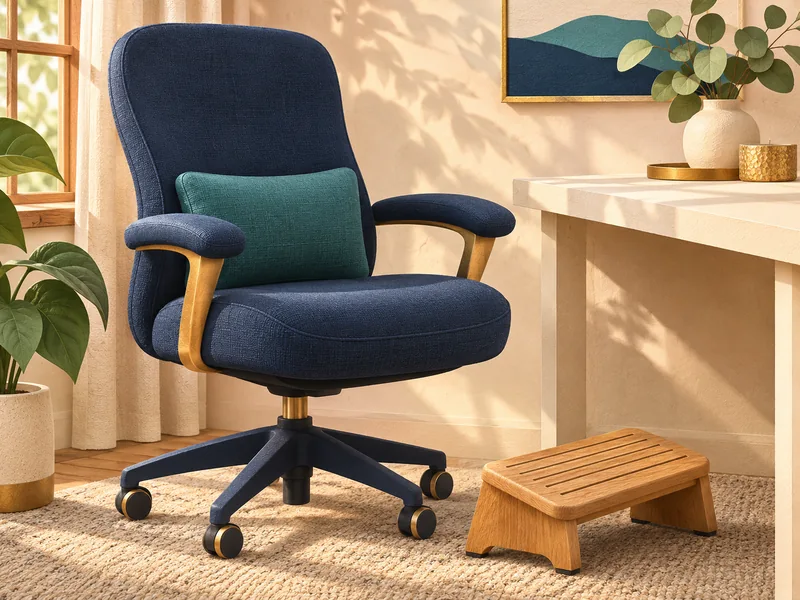
A supportive chair with a lower-back cushion and a footrest.
Learn the motion first.Technique comes before repetitions.
06 OF 07

Build strength as well as flexibility.

Stretching is only one part of many rehabilitation plans. A clinician or physical therapist may also work on strength, endurance and the movements needed for work or home life.

Tell them the task you want to manage, such as standing to cook or carrying a light grocery bag. That goal helps make exercise practical. Increasing resistance or adding strenuous movements without a plan can be counterproductive.

Two small baskets of folded towels representing lighter household loads.
Train for an everyday task.Tell your clinician what you want the exercise to help you do.
07 OF 07

Use your response to guide the next session.

Write down the movement, how it felt during the session and whether symptoms changed afterward. This makes a follow-up much more useful than simply saying that exercise did not work.

If the same movement repeatedly aggravates symptoms, stop it and ask for an adjustment. If pain continues to limit your day despite a reasonable plan, arrange a review. Our home-care guide covers sitting, sleep and other everyday adjustments.

You can also read when to get back pain checked for more on that decision.

An open notebook, pen and clock for recording symptom changes.
Keep a short exercise note.Progress should fit your response.

YOUR NEXT STEP IN McKINNEY

Learn more about Texas Spine Physicians

Choose movements that fit your symptoms and goals.

Brite John Chalunkal, DO

YOUR GUIDE’S AUTHOR

Brite John Chalunkal, DO

Pain Medicine
Physical Medicine & Rehabilitation

If every exercise search gives you a different answer, an assessment can help narrow the choices. The aim is an activity plan that fits your symptoms and the tasks you want to manage.

At Texas Spine Physicians in McKinney, I combine Pain Medicine with Physical Medicine and Rehabilitation to evaluate pain and discuss next steps. Bring your symptoms, prior care and the activity you want help with. The office can confirm your provider preference when arranging a visit.

Make your visit more useful

Bring the names or a written description of movements you tried and what happened during and after them. Explain any injury, surgery or exercise restrictions.

01

Two board certificationsPain Medicine and Physical Medicine & Rehabilitation

02

Specialty trainingColumbia residency and University of Michigan pain fellowship

03

A McKinney officeBack, neck, nerve and joint pain care on Eldorado Parkway

WHAT HAPPENS NEXT

A simple start to your first visit.

  1. 1

    Request a visit

    Use the practice website or call the office. Mention your provider preference and ask about insurance or referral requirements.

  2. 2

    Confirm the details

    The office will contact you to arrange the visit. Your appointment is confirmed when the team confirms the provider, date and time.

  3. 3

    Bring your starting point

    Bring your medication list, relevant records or imaging, insurance information and questions. Include one activity you would like to discuss getting back to.

BEFORE YOU MAKE THE CALL

A few common questions.

What is the best stretch for lower back pain?

There is no single best stretch for every cause. Walking, knee rolls, knee-to-chest movements or other exercises may fit some people and aggravate others. Choose movements with professional guidance when symptoms or medical history make the choice unclear.

How many repetitions should I do?

The appropriate amount depends on the exercise, symptoms and health history. Start with the amount agreed with your clinician or physical therapist. Do not increase repetitions when the movement is making symptoms worse.

What insurance does Texas Spine Physicians accept?

The practice accepts Medicare, Medicaid and most commercial insurance plans, including Blue Cross Blue Shield, Aetna and Cigna. Participation and coverage vary by specific plan. Call (469) 296-9782 so the office can check your plan, explain referral requirements and discuss self-pay options.

PAIN CARE IN McKINNEY

Find a movement plan that fits your back.

Request an evaluation with Texas Spine Physicians in McKinney. The office will follow up to confirm your provider, appointment details and insurance requirements.

Request an appointment Prefer to talk? Call (469) 296-9782

For educational purposes only.

Powered by GrowLocals.ai
Lower Back Exercises: 7 Starting Points | McKinney